When the Story Dies: How Crypto Hype Cycles Collapse and Take Your Portfolio With Them
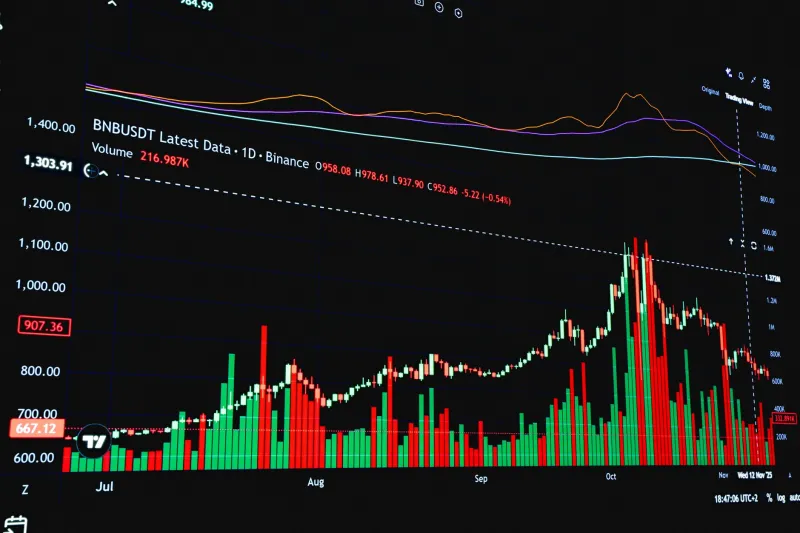
There's a pattern that plays out in crypto over and over again, and if you've been in this space long enough, you've probably lived through it at least once. A project shows up with a compelling pitch — maybe it's the next evolution of DeFi, maybe it's a blockchain game that's going to disrupt the $200 billion gaming industry, maybe it's a layer-1 that promises to make Ethereum look like dial-up internet. The community goes wild. The token pumps. Influencers pile on. Then, sometimes slowly and sometimes overnight, the whole thing just... falls apart.
What you're watching when that happens isn't just a bad investment. You're watching narrative collapse in real time — and it's one of the most destructive forces in crypto markets.
The Engine Behind Every Crypto Pump
Before you can understand why these projects crater, you have to understand what was actually lifting them in the first place. Unlike stocks, most early-stage crypto tokens don't have earnings, revenue, or even a finished product. What they have is a story. And that story — if it's told well and timed right — can drive billions of dollars in market cap on nothing but collective belief.
This isn't a bug in the system. It's actually how a lot of legitimate innovation gets funded. But it also means the price of a token is, at its core, a bet on whether the narrative holds. The moment investors start questioning whether the story is real, you don't just get a modest correction. You get a crisis of faith.
And in crypto, a crisis of faith hits different than a bad earnings report on Wall Street.
Case Study: The Play-to-Earn Collapse
Axie Infinity is probably the cleanest example of narrative collapse in recent crypto history. At its peak in late 2021, it was the story in gaming crypto — a game where players in the Philippines and other developing countries were earning real income just by playing. The token AXS hit nearly $165. The project had a $9 billion market cap. Andreessen Horowitz had backed it. The narrative was bulletproof.
Except the economics were a Ponzi dressed up in pixels. The game's internal currency, SLP, required constant new player inflows to maintain value. When growth slowed, SLP started bleeding. When SLP bled, the "play to earn" promise evaporated. When that promise evaporated, the reason to buy AXS disappeared. By mid-2022, AXS had dropped over 95% from its high.
The warning signs were there, though. On-chain data showed SLP emission rates wildly outpacing burn rates. The user growth curve was flattening. Developer activity on secondary features was thin. The community forums had shifted from excitement about gameplay to anxiety about token price. These are the tells — and most retail holders missed them entirely because the story was still so good.
The Psychology That Makes the Fall Steeper
Here's where crypto diverges hard from traditional asset failures. When a stock collapses, shareholders are generally a passive group — they don't have Discord servers, they don't hold Twitter Spaces to talk each other into holding, and their identity isn't wrapped up in the company's success.
Crypto communities are different. By the time a project is at peak narrative, its holders are often emotionally invested in ways that go way beyond financial returns. They've argued for the project online. They've convinced friends and family to buy in. The token is part of their identity.
This creates a brutal dynamic on the way down. Early sellers are labeled traitors. Red flags get rationalized as FUD. The community doubles down on the narrative even as the fundamentals rot underneath. This isn't stupidity — it's basic human psychology. But it delays the honest reckoning and concentrates selling pressure into a much shorter window when the dam finally breaks.
When the community consensus finally shifts from "this is a temporary dip" to "the story is actually broken," you don't get an orderly decline. You get a stampede.
Technical Amplifiers: Why Crypto Falls Faster Than It Rose
Beyond psychology, there are structural features of crypto markets that turn narrative collapse into a freefall.
Leverage gets liquidated. A significant chunk of crypto buying at the top is leveraged. When price starts dropping, leveraged positions get liquidated automatically, which pushes price down further, which triggers more liquidations. It's a cascade that has no equivalent in most traditional markets.
Liquidity evaporates. During a pump, market makers and liquidity providers are happy to participate. During a collapse, they pull back. Bid/ask spreads widen, slippage gets ugly, and even modest sell orders can move price dramatically. The project's token, which looked like it had deep liquidity at $500M market cap, suddenly trades like a penny stock.
Unlock schedules hit at the worst time. Many projects have vesting schedules that release tokens to early investors and team members on a rolling basis. When a narrative starts cracking, these insiders often have strong incentives to sell — and their unlocks can accelerate the decline right when retail holders are most desperate for good news.
Social media turns. The same influencer ecosystem that amplified the narrative on the way up has financial incentives to pivot to the next hot thing. Channels that were posting bullish content start going quiet or, worse, start posting cautionary takes that spook the remaining holders.
What the Early Warning Signs Actually Look Like
So how do you spot a narrative before it collapses? There's no perfect system, but a few signals tend to show up consistently:
- The roadmap keeps getting pushed. One delay is understandable. A pattern of delays suggests the team either can't execute or was never being straight with the community about timelines.
- Token price becomes the primary talking point. When a community stops talking about the product and starts talking almost exclusively about price, that's a sign the underlying story has gone thin.
- Developer activity drops off. Tools like GitHub commit trackers aren't foolproof, but a sustained decline in development activity is a concrete red flag that the builders are losing faith or leaving.
- The tokenomics require perpetual growth. If you can't figure out how the token maintains value without an endless stream of new buyers, you're holding a narrative token with no floor.
- Key team members quietly exit. LinkedIn updates, Twitter bio changes, reduced presence in community channels — these are soft signals that the people who know the most are heading for the exits.
Surviving the Gravity Well
The crypto graveyard is enormous, and it keeps growing. Terra/LUNA, Celsius, countless NFT projects, DeFi protocols that launched with millions in TVL and now sit empty — they all followed some version of this same script. A compelling story, a community that bought in hard, warning signs that got rationalized away, and then a collapse that felt sudden but had actually been building for months.
You don't have to be the one left holding the bag. The edge isn't some secret on-chain metric or an alpha group that tips you off. It's the discipline to keep evaluating whether the story you bought is still true — and the willingness to act when the answer is no, even if the community is still cheering.
Out here in the outer reaches of crypto, the stories that get you to the moon can just as easily pull you into the gravity well. Know which one you're in.