Dead Money Orbit: How Your Worst Positions Are Holding Your Entire Portfolio Hostage

There's a particular kind of suffering unique to crypto traders. It's not the sharp sting of a stop-loss trigger or the gut punch of a rug pull. It's slower than that — more like watching a planet drift further and further from the sun, knowing it's never coming back to warmth, but refusing to look away.
You know the position. Everyone has one. Maybe it's a Layer 1 token you bought at the top of the 2021 bull run that's now sitting at 87% down. Maybe it's a DeFi governance token from a protocol that still technically exists but hasn't had a meaningful update since the last time Taylor Swift released an album. Whatever it is, it's still sitting in your wallet. And here's the uncomfortable truth: just having it there is costing you more than the loss itself.
What the Gravity Well Actually Looks Like
In physics, a gravity well describes the pull an object exerts on everything around it based on its mass. In portfolio psychology, your biggest losing position works the same way. The more capital you have sunk into it, the more mental bandwidth it consumes, and the harder it becomes to think clearly about anything else in your holdings.
Behavioral economists have a clinical name for this: loss aversion. Studies — including foundational research by Kahneman and Tversky — consistently show that humans feel the pain of a loss roughly twice as intensely as they feel the pleasure of an equivalent gain. In crypto, where volatility is extreme and losses can be staggering, that psychological multiplier hits even harder.
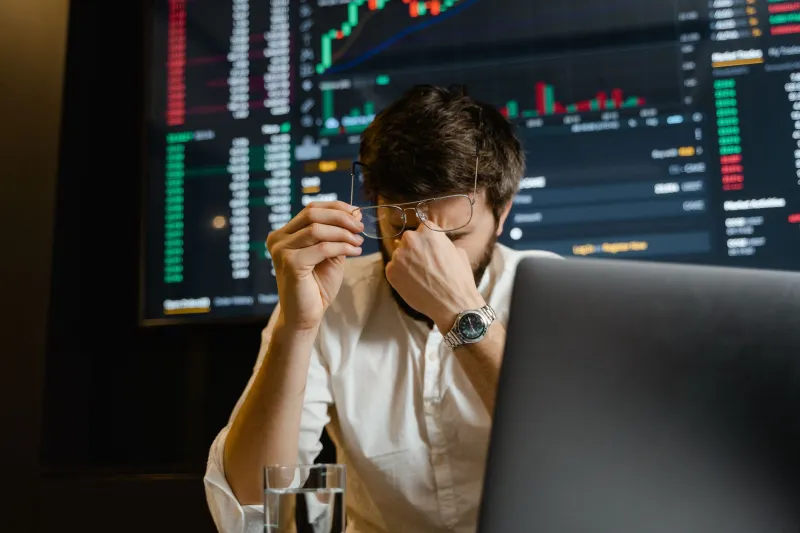
What this means in practice is that traders don't just hold losing positions. They orbit them. They check the price compulsively. They search Twitter and Discord for signs of a comeback. They average down when they shouldn't. They rationalize holding because selling would mean "making the loss real" — as if the market cares whether you've hit the confirm button.
"I held a bag for fourteen months because I kept telling myself it was just waiting for its moment," said one trader from the UranusCoin community forums. "The whole time, Solana ran 300%. I watched it happen while I was glued to a token that was basically dead."
That story isn't unusual. It's closer to the norm.
The Opportunity Cost Nobody Talks About
Here's what the math looks like when you strip away the emotion. Say you have $5,000 locked in a position that's down 70%. To break even, that token needs to return roughly 233%. Meanwhile, you've identified a project with genuine momentum, solid fundamentals, and a catalyst on the horizon — but you don't have free capital to deploy because it's all sitting in the dead zone.
This is the real cost of the gravity well. It's not just the unrealized loss on the underwater position. It's the compounding gains you're forfeiting by refusing to rotate. Data from on-chain analytics platforms like Nansen and Glassnode has repeatedly shown that average holding periods for losing positions in retail wallets are dramatically longer than for winning ones — sometimes by a factor of three to five. Traders let winners run for weeks and hold losers for years.
The asymmetry is brutal. And most people don't even realize they're doing it.
Why "Waiting to Break Even" Is a Trap
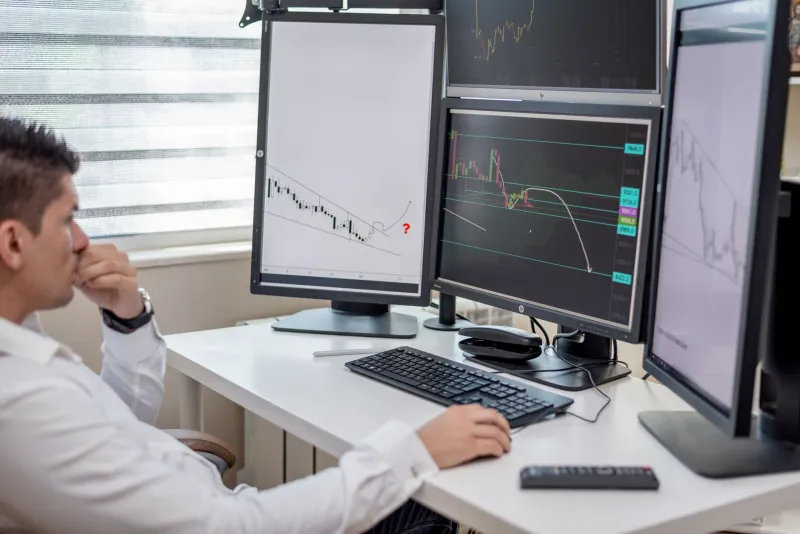
One of the most seductive lies in trading is the break-even myth. The thinking goes: I'll hold until I get back to my entry price, then I'll sell and move on. It sounds disciplined. It feels like patience. It's actually a cognitive bias called the anchoring effect — your brain has attached irrational significance to the price you paid, as if that number has any bearing on where the asset is going next.
The market doesn't know what you paid. It doesn't care. The question that actually matters is: if I didn't already own this, would I buy it today at this price?
If the honest answer is no — and for most zombie positions, it is — then holding is just loss aversion wearing a patience costume.
"I finally asked myself that question about a governance token I'd been holding for over a year," another trader shared. "The answer was obviously no. I hadn't even used the protocol in months. I sold the next morning, moved the capital into something I actually believed in, and stopped thinking about it."
Breaking Orbit: Practical Moves for Freeing Trapped Capital
Getting out of the gravity well isn't just about selling. It's about building a decision framework that removes emotion from the equation before you're in the middle of one.
Set exit rules before you enter. Decide in advance what conditions would cause you to exit a position — both on the upside and the downside. A rule like "if this drops 40% with no fundamental change in the project, I sell" is far easier to follow when you're calm than when you're staring at a sea of red.
Use tax-loss harvesting as cover. For US traders, selling a losing position isn't just emotionally cathartic — it can be financially strategic. Realizing a loss can offset gains elsewhere in your portfolio, reducing your tax liability. The IRS wash-sale rule that applies to stocks doesn't currently apply to crypto (though this may change), which means you can sell, harvest the loss, and potentially re-enter the same position if you genuinely believe in it long-term.
Reframe the decision as capital allocation, not defeat. Instead of thinking "I'm selling at a loss," try thinking "I'm reallocating this capital to a higher-probability opportunity." It's not retreat. It's portfolio management.
Do a monthly dead weight audit. Once a month, go through every position and ask the honest question: would I buy this today? Any position that gets a clear "no" goes on a watchlist for exit. Give it 30 days to prove you wrong. If nothing changes, move on.
Limit how often you check dead positions. Compulsive price-checking feeds the gravitational pull. Set a rule — maybe you only look at underwater positions once a week. This reduces the emotional noise and makes it easier to think about your portfolio as a whole rather than fixating on the hole.
The Hardest Part Is Admitting It's Not Coming Back
There's no clean ending here. Some of those positions really are gone. The protocol quietly stopped developing. The team moved on. The narrative shifted and nobody's coming back to revive it. The sooner you can make peace with that reality, the sooner you can stop letting dead money orbit your portfolio like a ghost.
The outer reaches of crypto are full of opportunity — new protocols, emerging chains, DeFi mechanisms that didn't exist eighteen months ago. But you can't explore new territory if you're anchored to a dead planet.
Breaking free from the gravity well is less about finding the perfect exit price and more about deciding that your future is worth more than your past mistakes. The capital sitting in that zombie token could be doing something. It could be compounding, earning yield, riding a real narrative.
Instead, it's just orbiting. And orbiting isn't the same as moving forward.