Frozen at the Launch Pad: How Waiting for the Perfect Trade Entry Is Costing You More Than Bad Trades Ever Could
There's a particular kind of pain that veteran crypto traders know intimately. It's not the sting of a stop-loss getting hit or the gut-punch of a rug pull. It's the slow, creeping regret of watching a token 4x while your entry order sat untouched because the RSI wasn't quite where you wanted it, or the support level hadn't been tested one more time, or you were waiting for the weekend to pass before committing.
That's analysis paralysis — and in crypto, it doesn't just cost you gains. It fundamentally rewires how you think about markets until every trade feels like defusing a bomb.
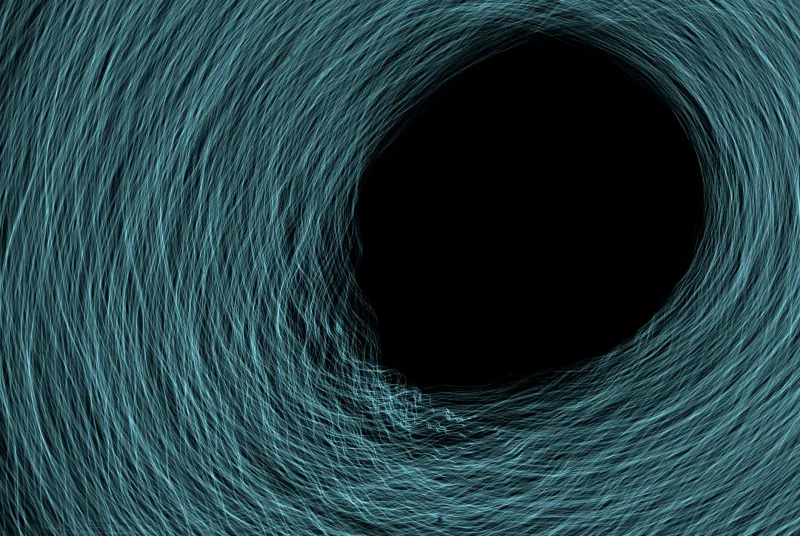
The Gravity Well Nobody Talks About
Think about what a gravity well actually does. It pulls objects in, holds them in an endless loop, and makes escape feel increasingly impossible the longer you stay caught in it. That's exactly what perfectionism does to a trader's decision-making process.
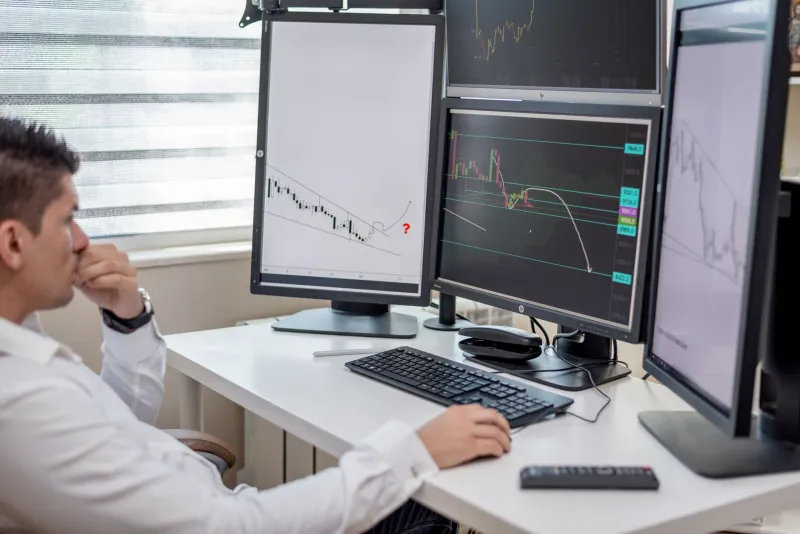
You spot a setup. You research the project. You draw your levels. Then the second-guessing begins. You add another indicator. You check a different timeframe. You read one more Reddit thread. You wait for one more candle to close. Before you know it, the move has already happened — and you're sitting there with a perfectly annotated chart and zero profit to show for it.
The brutal irony is that the more time you spend analyzing, the more confident you feel that you should wait just a little longer. The data keeps coming in, and your brain interprets more information as a reason to delay rather than a reason to act.
Why Crypto Punishes Perfectionists More Than Any Other Market
Traditional equity markets move at a pace that can, in some ways, reward patience. You might genuinely have days or weeks to build a position in a large-cap stock without missing the bulk of a move.
Crypto doesn't work like that. The market runs 24/7, 365 days a year. News breaks at 3 a.m. on a Tuesday. A whale wallet moves, a bridge exploit drops, a celebrity tweets — and suddenly the window you were so carefully sizing up has slammed shut. The volatility that makes crypto exciting is the same force that makes hesitation expensive.
Small-cap and mid-cap altcoins are even less forgiving. These tokens often have narrow liquidity windows where meaningful price discovery happens fast. A move from $0.08 to $0.30 can unfold in 48 hours. If you spent those 48 hours waiting for a cleaner chart structure, you didn't protect yourself — you just watched from the stands.
The Psychology Behind the Freeze
Analysis paralysis isn't really about analysis. It's about fear wearing a very convincing disguise.
When you keep adding conditions to your entry criteria, what you're actually doing is building a psychological escape hatch. If you never pull the trigger, you can never be wrong. You can always tell yourself you were about to trade, that you saw the setup, that you were just being disciplined. It's a way of protecting your ego while your account stagnates.
Behavioral economists call this "loss aversion" — the well-documented tendency for humans to feel the pain of losses roughly twice as intensely as the pleasure of equivalent gains. In crypto, where volatility is extreme and losses can be dramatic, this instinct goes into overdrive. Your brain would rather you miss a 300% gain than risk a 30% drawdown.
The result? You become a spectator in a market you're supposedly participating in.
What a 'Good Enough' Entry Actually Looks Like
Here's the reframe that changes everything: your entry doesn't need to be perfect. It needs to be justified.
A justified entry means you've answered three questions honestly:
1. Why does this trade make sense right now? Not "why could it work someday" — why does the setup, the narrative, or the momentum support action today? If you can't answer this in two sentences, you don't have a trade yet.
2. Where does the thesis break down? Every good trade has an invalidation point. Define it before you enter. This is your stop-loss logic, your circuit breaker. Knowing exactly when you're wrong makes pulling the trigger dramatically easier because you've already handled the worst case.
3. What's my realistic upside, and does it justify the risk? You don't need a 10x to make a trade worth taking. A 2:1 reward-to-risk ratio on a well-structured setup is a legitimate trade. Stop holding out for the perfect risk/reward that never actually materializes in real markets.
If you can answer all three, you have enough to act. Not perfect information — enough information.
Breaking the Loop in Practice
Some concrete tactics that actually work:
Set a decision deadline. Give yourself a fixed window — say, 30 minutes — to evaluate a setup. When the timer hits, you either take the trade or you walk away entirely. No extensions. Deadlines force your brain to prioritize rather than accumulate.
Scale in, don't wait for the perfect full position. One of the biggest drivers of paralysis is the feeling that you need to nail the exact bottom before committing. Instead, take half your intended position at current price and leave room to add if the setup confirms further. Now you have skin in the game without feeling overexposed.
Keep a "missed trades" journal. Write down every setup you analyzed but didn't take, and track what happened. Most traders who do this for a month are shocked to discover their hesitation cost them far more than their actual losses did. Seeing that data in black and white is a powerful behavioral override.
Separate research time from execution time. If you're deep in chart analysis mode, you're not in the right headspace to pull the trigger cleanly. Do your research, close your charting app, take a walk, then come back and make the call. Switching cognitive modes breaks the overthinking loop.
Conviction Is a Skill, Not a Personality Trait
Some traders act like decisiveness is something you're born with — either you're the type who pulls the trigger or you're not. That's nonsense. Conviction is a skill that gets built through repetition, through having a framework you trust, and through accepting that imperfect entries on good setups beat perfect paralysis every single time.
The best traders in any market aren't the ones with the most data. They're the ones who've learned to act on sufficient data without waiting for certainty that the market will never offer.
Crypto moves fast. The opportunities are real, but they don't wait around for you to get comfortable. If you've been frozen at the launch pad — watching rockets lift off while you recalculate trajectory — it's time to stop optimizing your entry and start building the discipline to actually take one.
The market doesn't reward perfect timing. It rewards people who show up and commit.