Shallow Water, Deep Trouble: How to Trade Thin Altcoin Markets Without Getting Eaten Alive
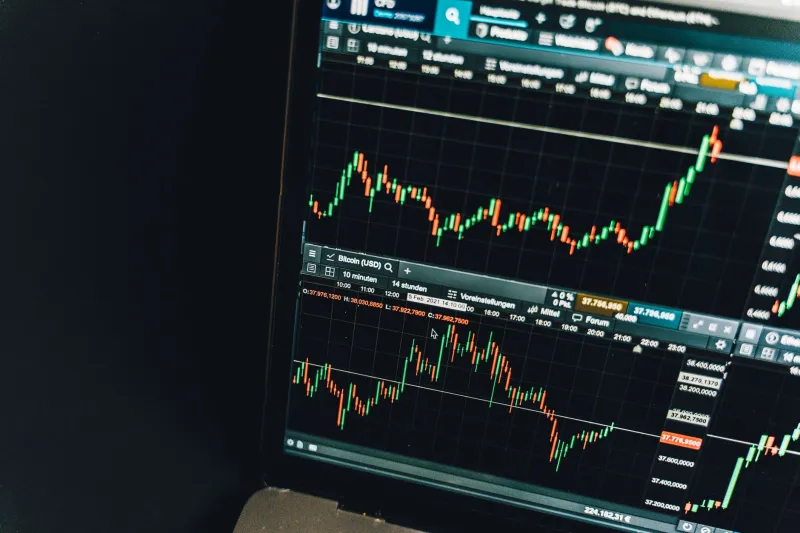
There's a certain kind of excitement that comes with finding a small altcoin before the crowd does. The chart looks clean, the community is buzzing, and the trading volume seems just active enough to feel real. Then you hit the buy button on a $3,000 position and watch the price jump 4% in the wrong direction — because you were the market.
Welcome to the gravity well of low liquidity. It's one of the most misunderstood forces in crypto, and it quietly wrecks more retail portfolios than almost any other single factor. The good news? It's entirely avoidable once you know what you're actually looking at.
What "Thin" Really Means and Why It Matters
Liquidity, at its core, is just the ability to buy or sell an asset without dramatically moving its price. In deep markets — think Bitcoin on Coinbase or ETH on Binance — you can execute a $50,000 order and barely leave a scratch. In thin markets, a $500 order can shift the price by 3% or more.
The order book is where this reality lives. Every exchange that supports limit orders displays a real-time list of open buy and sell orders at various price levels. The "depth" of that book tells you how much capital is sitting on each side, and how far the price would have to travel to fill a large order.
A healthy order book looks like a staircase — lots of orders clustered near the current price, gradually thinning out as you move further away. A dangerous order book looks like a cliff — a handful of orders near the top, then nothing for a long stretch before the next wall of bids or asks appears.
When you're trading an altcoin with a daily volume under $500,000, you're almost certainly operating in cliff territory. That's not necessarily a dealbreaker, but it means the rules of engagement are completely different.
How to Actually Read an Order Book Before You Trade
Most traders glance at the order book for about two seconds before clicking buy. That's not reading it — that's just looking at it.
Here's what you actually want to assess:
Total bid and ask depth within 2% of the current price. Pull up the order book on whatever exchange you're using and look at the cumulative buy orders sitting within 2% below the current price. If that number is $8,000 and you're trying to buy $5,000 worth of the token, your order alone represents more than half of the available buying pressure in that range. You're going to move the market.
The spread. The gap between the best bid (highest buy order) and the best ask (lowest sell order) is your first warning signal. A spread of 0.1% is normal. A spread of 2% or more tells you this market is operating on fumes. Every trade you make starts in the red by the width of that spread.
Walls and gaps. Look for large single orders sitting at specific price levels — these are often called walls. A big sell wall 5% above the current price might cap your upside. A big buy wall below might provide support. But also look for gaps — price ranges where there are almost no orders at all. If the price breaks through a thin zone, it can move violently and fast before finding the next cluster of orders.
Calculating Slippage Before You Pull the Trigger
Slippage is the difference between the price you expected to pay and the price you actually paid. In liquid markets it's negligible. In thin markets it can be the difference between a profitable trade and an immediate loss.
Here's a back-of-napkin method that actually works:
- Open the order book and look at the ask side (the sell orders you'll be buying from).
- Add up the available sell orders from the current price upward until you hit the dollar amount you want to spend.
- Note the highest price level you had to reach to fill your full order.
- The difference between that price and the current price is your estimated slippage.
If you're trying to buy $2,000 of a token currently priced at $0.50, and the order book only has $800 worth of asks at $0.50, $600 at $0.52, and $700 at $0.55, you're going to fill at an average price somewhere around $0.52 or $0.53. That's 4–6% slippage before you've even thought about exit costs.
Many DEX interfaces like Uniswap or Trader Joe will show you an estimated slippage warning before you confirm. Pay attention to it. If it's showing you 3% or more, you're in shallow water.
The Limit Order Is Your Best Friend Here
Market orders in thin altcoin markets are basically a donation to whoever is sitting on the other side of the book. You're telling the exchange "fill me at whatever price it takes," and in a thin market, that can cost you dearly.
Limit orders flip the dynamic. Instead of accepting whatever price the market gives you, you set the price you're willing to pay and wait for the market to come to you. This has a few key advantages:
- You control your entry cost. No surprises, no slippage beyond what you've already calculated.
- You add liquidity instead of taking it. In thin markets, your limit order becomes part of the book itself, which can actually help stabilize the price.
- You avoid panic-buying into momentum. If a thin-market altcoin is spiking, a market order chases the move. A limit order keeps you disciplined.
The tradeoff is that your order might not fill. That's okay. Missing a trade is always better than entering a bad one. Set your limit slightly above the current ask if you really want the fill — just not so far above that you're voluntarily giving away the premium.
Real-World Scenario: When It Goes Wrong
Consider what happened to plenty of traders during the 2023 low-cap altcoin season. A token on a smaller DEX was generating buzz in a Discord server. Volume was around $200,000 a day — enough to look active, not enough to absorb real buying pressure.
Several retail traders, excited by the momentum, hit market buy on amounts ranging from $1,000 to $5,000. The first few filled reasonably close to the displayed price. But as each successive order consumed the available asks, the price ratcheted up. The last buyers in that wave paid 12–18% more than the price they saw before clicking. Within an hour, early buyers took profits into that new liquidity, and the price settled back down. The late entrants were immediately underwater with no easy exit — because now there were no buyers to sell to.
This isn't a scam story. Nobody explicitly manipulated that trade. It was just the cold physics of thin liquidity doing exactly what thin liquidity does.
A Few Ground Rules for Thin Market Trading
If you're going to trade low-liquidity altcoins — and there are real opportunities out there — operate by these principles:
- Size down aggressively. Your position should be small enough that it doesn't meaningfully move the market on its own.
- Split large entries into smaller chunks. Rather than one $3,000 buy, try three $1,000 limit orders spread across different price levels over time.
- Always model your exit before you enter. If you can't get out of the position without tanking the price yourself, reconsider the trade entirely.
- Watch volume trends, not just price. A token can look like it's rallying while volume is actually declining — a classic sign that the move has no depth behind it.
The outer reaches of the crypto market are full of interesting assets that never get covered in mainstream financial media. Some of them are genuine opportunities. But the gravity of thin liquidity is real, and it pulls hard on anyone who doesn't respect it. Trade smart, size appropriately, and always know what the order book is telling you before you commit a single dollar.