Big Fish, Fake Waves: How Whale Wallets Manufacture Momentum and Leave Retail Holding Nothing

You spot it on a Tuesday afternoon. Volume spikes. Price rips 18% in under an hour. Social feeds light up with rocket emojis. Every instinct you've trained says this is the moment — the breakout everyone was waiting for. So you buy in.
And then, almost like clockwork, the rug pulls back. Price bleeds. Volume evaporates. You're left holding a bag that smells suspiciously like someone else's exit.
Welcome to the gravity well — that invisible zone where whale wallets create enough artificial pull to suck in retail capital before dumping it back into the void. It happens constantly, across chains, across market caps, and across experience levels. The good news? The blockchain is a public ledger, and whales leave fingerprints.
What a Whale Actually Does to a Market
In traditional finance, institutional players have compliance departments, disclosure requirements, and regulatory eyes watching their moves. Crypto? Not so much — at least not yet. That asymmetry gives large holders enormous leverage over smaller markets.
A wallet holding 5-15% of a token's circulating supply doesn't need to do much to move price. A coordinated buy across a handful of related wallets can trigger technical indicators, set off algorithmic trading bots, and create the kind of chart pattern that retail traders are trained to chase. It's not magic — it's just scale.
The playbook breaks down into two phases most traders never separate: accumulation and distribution. Understanding the difference between the two is where most retail investors lose the plot entirely.
Accumulation vs. Distribution: The Setup You're Not Seeing
During accumulation, whales are quietly building positions. They're not buying in big obvious chunks — that would move price against themselves. Instead, they spread purchases across multiple wallets, use off-hours trading windows with thinner order books, and sometimes deliberately suppress price through small sell orders to keep interest low while they load up.
This phase often looks like nothing. Price drifts sideways. Volume is uninspiring. The community starts complaining the project is dead. That boredom? Sometimes it's manufactured.
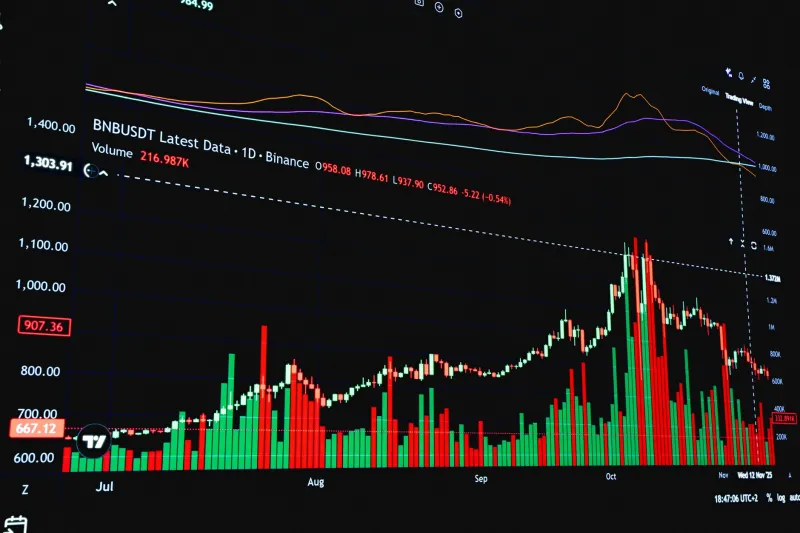
Distribution is the flip side. Once a whale has the position they want, they need buyers to sell into. That's where the momentum manufacturing kicks in. Coordinated buys push price through key resistance levels. Bots pick it up. Chart watchers post screenshots. FOMO does the rest. Retail rushes in — and the whale starts quietly unloading into that demand.
By the time the volume dries up and price reverses, the whale is largely out. Retail is in. The trade is done.
Reading On-Chain Data Like a Skeptic
Here's where your edge lives. Because every transaction on a public blockchain is visible, whale behavior leaves a trail that patient analysts can follow. A few tools and habits can dramatically shift how you read market signals.
Start with wallet concentration. Platforms like Etherscan, Solscan, or Nansen let you see how token supply is distributed. If the top 10 wallets hold 40%+ of circulating supply, you're operating in a market where a small group has outsized influence. That's not automatically a red flag — early projects often look like this — but it means every price movement needs extra scrutiny.
Watch wallet age and transaction history. Fresh wallets that suddenly accumulate large positions right before a price spike are a classic tell. Legitimate long-term holders behave differently than wallets that were clearly created for a specific operation. Cross-reference wallet creation dates against price action timelines.
Track exchange inflows and outflows. When large amounts of a token move from cold wallets to exchange hot wallets, distribution is likely coming. Whales don't move tokens to an exchange because they're bored — they're preparing to sell. Tools like Glassnode and CryptoQuant track these flows in real time for major tokens.
Look for cluster patterns. Multiple wallets receiving similar amounts from a single source, then buying the same token within a tight time window, is a coordination signal. This is harder to spot manually but blockchain analytics firms track it constantly. Following their public research is free and often underused by retail traders.
The Fake Breakout Pattern
One of the most common whale traps is the engineered breakout. Here's how it typically runs in practice:
A token has been ranging between, say, $0.40 and $0.50 for weeks. Retail traders have identified $0.50 as key resistance. Whale wallets know this too — because they've been watching the same charts.
A coordinated buy pushes price through $0.51. Every trader who had an alert set at that level gets pinged. Breakout posts flood crypto Twitter and Discord. New buyers pile in, pushing price to $0.58. The whale has been selling the entire way up from $0.50, using the retail inflow as exit liquidity.
Price stalls at $0.58 because the buying pressure was mostly reactive, not conviction-based. Whale selling continues. Price slips back to $0.47. Retail traders who bought the breakout are now underwater, and the whale is flush with profits.
None of this required any news. No partnership announcement. No protocol upgrade. Just an understanding of where retail attention would concentrate and how to exploit it.
Not Every Whale Is a Predator
It's worth saying clearly: not all large wallet activity is manipulative. Genuine conviction buyers exist. Protocol treasuries move tokens for legitimate reasons. Long-term holders accumulate during bear markets because they actually believe in what they're holding.
The distinction often shows up in behavior over time. Legitimate large holders tend to have longer average holding periods, fewer wallet interactions with known mixer or wash-trading addresses, and accumulation patterns that don't align suspiciously with upcoming marketing pushes or influencer campaigns.
When whale accumulation happens quietly, over weeks, with no corresponding social media buildup — that's actually a more credible signal than a sudden spike accompanied by a coordinated narrative push. The absence of hype around genuine accumulation is, paradoxically, often a healthier sign.
Protecting Yourself Before You Buy
The simplest defense against whale traps is slowing down. Most of the damage happens because retail traders react to price action in real time without checking what's underneath it. Before you chase a move, give yourself five minutes with a blockchain explorer.
Who's been buying in the last 48 hours? Are those wallets old or new? Is supply concentrated? Are exchange inflows rising — suggesting distribution — or falling, which could support genuine accumulation?
None of this is foolproof. Sophisticated whale operations span multiple chains and use enough wallet fragmentation to obscure clean patterns. But most pump-and-dump setups are not that sophisticated. They rely on retail traders not doing basic homework.
The blockchain is one of the most transparent financial systems ever built. The irony is that most people trading on it never look at the underlying data. Whales count on that. Don't give them the satisfaction.
UranusCoin covers blockchain data, trading mechanics, and on-chain analysis to help crypto investors navigate markets without getting left in the dark. Always do your own research before making any investment decisions.