Escape Velocity or Crash Landing? What US Crypto Regulations Mean for Your Portfolio Right Now
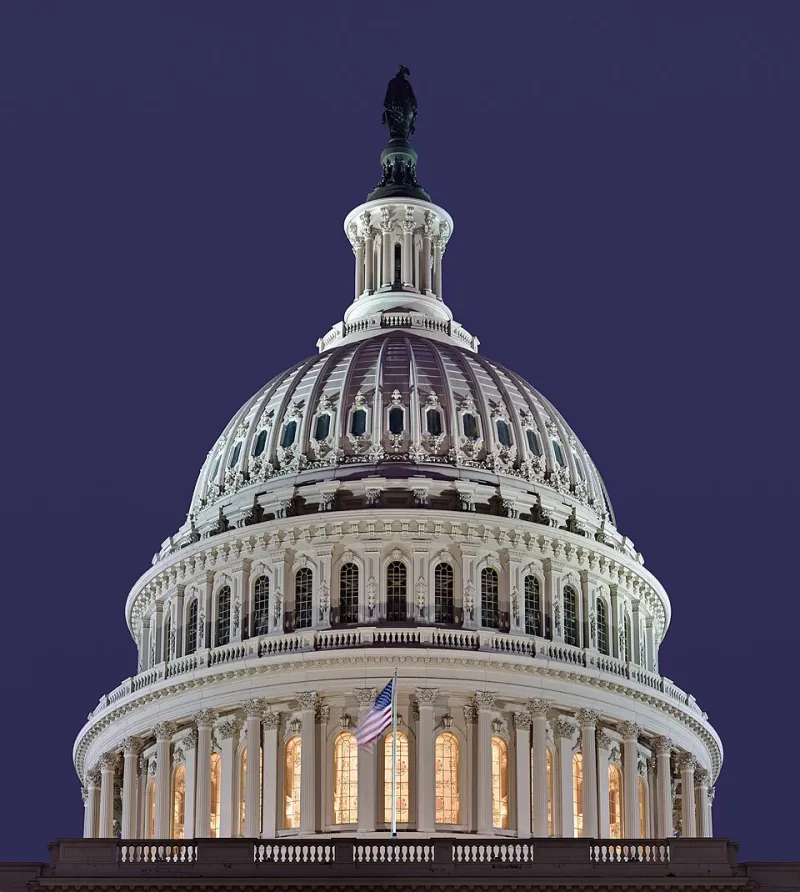
Photo: Diliff, CC BY 2.5, via Wikimedia Commons
If you've been following crypto news lately, it probably feels like Washington, D.C. has decided to plant a flag on the moon — whether the crypto community invited them or not. Regulatory pressure from the SEC, evolving stablecoin legislation, and debates over self-custody rights are no longer background noise. They're gravitational forces actively pulling the entire market into new trajectories. Whether that's a good thing depends a lot on where you're standing.
Let's break down what's actually happening, what it means for major coins and projects, and how US-based traders can position themselves intelligently without panicking.
The SEC's Long Arm: Enforcement as Policy
For the past few years, the Securities and Exchange Commission has operated on a strategy that critics have dubbed "regulation by enforcement." Rather than drafting clear rules and inviting the industry to comply, the SEC has filed lawsuits — against Coinbase, Binance, Ripple, and a long list of smaller token projects — essentially using the courtroom as a rulemaking substitute.
The Ripple case is probably the most instructive example here. After years of litigation, a federal court ruled that XRP sales on public exchanges did not constitute securities transactions, a partial win that sent ripples (pun intended) across the entire altcoin space. Projects that had been operating in the shadows suddenly had at least one data point suggesting retail token sales might not automatically trigger securities law. That ruling didn't end the debate, but it did shift the conversation.
For everyday US investors, this enforcement-first approach creates real uncertainty. When a major exchange gets sued, trading pairs disappear, liquidity thins out, and prices swing. That's not just regulatory drama — it's a direct hit to your portfolio's stability. The silver lining? Projects that survive SEC scrutiny often emerge with stronger legal footing and institutional credibility. Compliance, while painful and expensive, can function as a moat.
Stablecoin Legislation: The Quiet Revolution
While the SEC headlines dominate crypto Twitter, some of the most consequential regulatory movement is happening in a quieter corner: stablecoin legislation. Both the House and Senate have seen competing bills aimed at establishing a federal framework for USD-pegged digital assets, and the details matter enormously.
At its core, the debate is about who gets to issue stablecoins and under what rules. One camp wants bank-like oversight, requiring issuers to hold 1:1 reserves in Treasury bills or similar instruments. Another camp is more permissive, potentially allowing non-bank entities to issue stablecoins under a lighter-touch regime.
Why does this matter to you as a trader? Stablecoins are the plumbing of crypto markets. USDC and USDT together facilitate trillions in trading volume annually. If legislation forces issuers to restructure their reserves or face new reporting requirements, the ripple effects on DeFi liquidity pools, trading pairs, and yield-generating protocols could be significant. Some DeFi protocols that rely heavily on stablecoin liquidity might find themselves restructuring — or relocating to friendlier jurisdictions entirely.
On the flip side, a clear federal stablecoin framework could actually accelerate institutional adoption. Banks and asset managers who've been sitting on the sidelines waiting for legal clarity might finally feel comfortable integrating stablecoin rails into their operations. That's a potential demand surge that could benefit compliant projects in a big way.
Self-Custody: Your Keys, Your Coins — or Not?
One of the more contentious regulatory fronts involves self-custody — the ability to hold your own crypto in a personal wallet without going through an exchange. Proposals that would require exchanges to collect information on wallet transfers above certain thresholds, or that would restrict certain types of peer-to-peer transactions, have drawn fierce pushback from crypto advocates who argue these rules treat every user like a suspect.
For American investors, this is partly a philosophical debate about financial freedom and partly a very practical concern. If moving funds from Coinbase to your hardware wallet triggers reporting requirements, the friction of self-custody increases. That could push more users toward keeping assets on centralized platforms — which, as the FTX collapse reminded everyone, carries its own catastrophic risks.
Projects that emphasize non-custodial solutions — think decentralized exchanges, privacy-preserving wallets, and self-sovereign identity tools — are watching this space extremely closely. Regulatory outcomes here could either validate their existence or severely complicate their user experience.
Where Projects Are Fleeing (and Where They're Staying)
All of this regulatory pressure has triggered a visible migration. Several prominent crypto projects have moved their headquarters or primary operations to jurisdictions like the UAE, Singapore, or the Cayman Islands, citing clearer regulatory environments. Some layer-1 foundations have restructured their legal entities specifically to avoid US securities classification.
But here's the counterintuitive part: not everyone is running. A growing number of projects are leaning into US compliance, betting that regulatory clarity — even if it's more restrictive — will ultimately be rewarded with access to the world's largest pool of retail and institutional capital. Coinbase's public battle with the SEC, for instance, has arguably strengthened its brand among US users who see it as fighting for the industry's right to operate domestically.
For traders, this creates an interesting bifurcation. Compliant, US-friendly projects may offer lower short-term upside but greater long-term stability. Offshore projects chasing regulatory arbitrage might offer wilder gains but carry existential legal risk if US enforcement catches up.
How to Navigate This as an American Investor
So what's the practical takeaway? A few things worth keeping in mind:
Diversify across regulatory profiles. Don't put everything into projects that are currently under SEC investigation, but don't ignore them entirely either — resolution often unlocks price appreciation. Balance high-risk, legally ambiguous tokens with more established, compliance-forward assets.
Watch the stablecoin bills. The outcome of federal stablecoin legislation could reshape DeFi yields and liquidity dynamics more than almost any other single regulatory event on the horizon. Stay informed on Congressional progress.
Understand your exchange's jurisdiction. If a significant portion of your portfolio sits on an exchange that could face US enforcement action, consider diversifying your custodial exposure or increasing your self-custody holdings.
Regulation isn't inherently bearish. History shows that market-moving assets — equities, commodities, derivatives — all went through periods of regulatory growing pains before becoming mainstream investment vehicles. Crypto's regulatory moment might feel chaotic right now, but clarity, when it finally arrives, tends to bring capital with it.
The gravitational pull of US policy is real. But gravity, as any astronaut will tell you, isn't just a constraint — it's also what keeps things in orbit. The projects and investors who learn to work with these forces, rather than simply fleeing them, may end up exactly where they want to be.