Vanishing Act: How Your Altcoin's Liquidity Disappears Overnight and What You Can Do About It
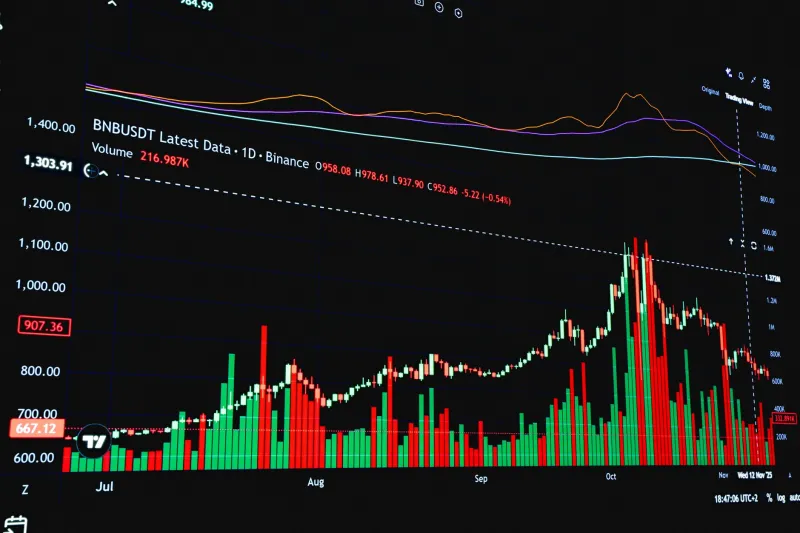
You've done your research. You found a promising altcoin, watched it climb steadily for a few weeks, and deployed a reasonable chunk of capital. Then one morning you wake up, check your portfolio, and try to exit — only to discover that the bid side of the order book has essentially disappeared. The token is technically still trading, but any sell order you place larger than a few hundred dollars craters the price by 10, 15, maybe 20 percent.
Congratulations. You've just discovered what liquidity evaporation feels like from the inside.
This isn't a fringe scenario. It happens constantly in crypto markets, especially in the altcoin space, and it catches experienced traders just as often as beginners. Understanding why it happens — and how to see it coming — might be the most practical skill you can develop as a retail investor.
What Liquidity Actually Means in a Crypto Market
Before getting into the mechanics of how liquidity vanishes, it helps to understand what we actually mean by the term. Liquidity, in simple terms, is the ability to buy or sell an asset quickly without meaningfully moving the price. A highly liquid market — think Bitcoin on a major exchange — can absorb millions of dollars in trades without flinching. An illiquid market is the opposite: even modest-sized orders cause significant slippage.
In traditional finance, market makers — usually big institutions — are contractually obligated to maintain two-sided quotes on securities. Crypto doesn't work that way. On most decentralized exchanges and even many centralized ones, the liquidity you see in an order book or a liquidity pool is entirely voluntary. It can be pulled at any time, for any reason, by whoever deposited it.
That's the fundamental fragility baked into the system.
The Mechanics of a Liquidity Withdrawal Event
So what actually triggers a liquidity drought? A few different scenarios tend to repeat themselves.
Market makers rotating capital. Sophisticated trading firms and individual whales often provide liquidity to altcoin markets because it's profitable during periods of high trading volume. When volume drops — or when a better opportunity appears elsewhere — they pull their bids and offers and move on. This can happen within hours.
Incentive programs expiring. A lot of newer DeFi protocols bootstrap liquidity by offering token rewards to liquidity providers. When those reward programs end or the token rewards drop in value, LPs have no reason to stay. They withdraw their capital, and the pool shrinks dramatically. You'll often see this play out in real time on platforms like DefiLlama, where total value locked (TVL) can crater by 40–60% in a single week after incentives dry up.
Negative sentiment cascades. Bad news — a hack, a regulatory threat, a team controversy — can cause LPs to exit simultaneously. Everyone's trying to protect their capital at the same time, and the traders left behind face a market where nobody wants to be on the other side of their sell order.
Coordinated pump-and-dump mechanics. In lower-cap tokens, a small group of insiders sometimes provides just enough liquidity to attract retail buyers during a price pump, then removes it entirely when they're ready to exit. By the time retail figures out what happened, the order book is a wasteland.
Red Flags to Watch Before You Deploy Capital
The good news is that liquidity problems rarely appear from absolutely nowhere. There are usually warning signs if you know where to look.
Concentrated liquidity providers. On DEXs, you can often see how many wallets are providing liquidity to a given pool. If 80% of the liquidity comes from two or three wallets, that pool is one withdrawal decision away from becoming illiquid. Tools like Etherscan, Dex Screener, and GeckoTerminal can help you map this out.
Thin order books on centralized exchanges. For CEX-listed tokens, open the actual order book — not just the price chart — and look at the depth. If there's a $50,000 ask wall at the current price but only $8,000 in bids within 5% below it, that's an asymmetric and dangerous setup.
Volume-to-market-cap ratio anomalies. A token with a $40 million market cap trading $200 million in daily volume sounds exciting. But it often signals wash trading or artificial volume inflation, neither of which represents real, reliable liquidity. When the artificial activity stops, so does the tradeable market.
Expiring liquidity mining programs. Check the project's official docs or Discord to find out when any active liquidity incentives are scheduled to end. This information is usually public and almost never priced in by retail traders.
How to Actually Test Liquidity Before You Commit
Reading the warning signs is one thing. Stress-testing liquidity before you put money in is another — and it's something most retail investors never bother to do.
The simplest method is to use a DEX aggregator like 1inch or Paraswap and simulate the trade you're planning to make. These platforms will show you your expected slippage before you execute. If buying $5,000 worth of a token shows 3% slippage, think carefully about what selling that same $5,000 will look like if sentiment has turned negative and half the liquidity has left the pool.
For CEX-listed assets, set up a paper trade. Place a limit sell order slightly below the current price and watch how long it takes to fill — and whether it fills at all. A liquid market absorbs that order quickly. An illiquid one leaves it sitting.
You can also track historical liquidity trends. If a token's liquidity pool has been shrinking for two or three weeks even while the price has been holding steady, that's a serious structural warning. Price can stay elevated on declining volume for a while — until it can't.
Getting Out When the Exits Are Narrow
If you're already stuck in an illiquid position, your options are limited but not zero.
Breaking up large sell orders into smaller chunks over time — commonly called dollar-cost averaging out — reduces your market impact compared to dumping everything at once. It won't save you from a collapsing market, but it can meaningfully reduce slippage in a slow-bleed scenario.
Checking multiple venues is also worth the effort. A token that's illiquid on one DEX might have better depth on another chain or a different exchange. Cross-chain bridges and aggregators can sometimes find you a better exit than the obvious route.
And sometimes the honest answer is: accept the loss now rather than wait for a recovery that may never come. In genuinely illiquid markets, hope is expensive.
The Bigger Lesson
Liquidity is the infrastructure of a functioning market. It's easy to take for granted when times are good and volume is flowing. But in crypto — especially in the altcoin universe — that infrastructure is built on sand. It exists at the pleasure of market makers, liquidity providers, and incentive programs that can all disappear faster than you can hit the sell button.
Before you fall in love with a token's price action or narrative, spend five minutes understanding who's actually providing the liquidity that lets you trade it. Because the moment they leave, you might find out that the market you thought you were in was never really there at all.