Supply and Demand Is a Lie: How Broken Tokenomics Are Quietly Bleeding Your Altcoin Dry
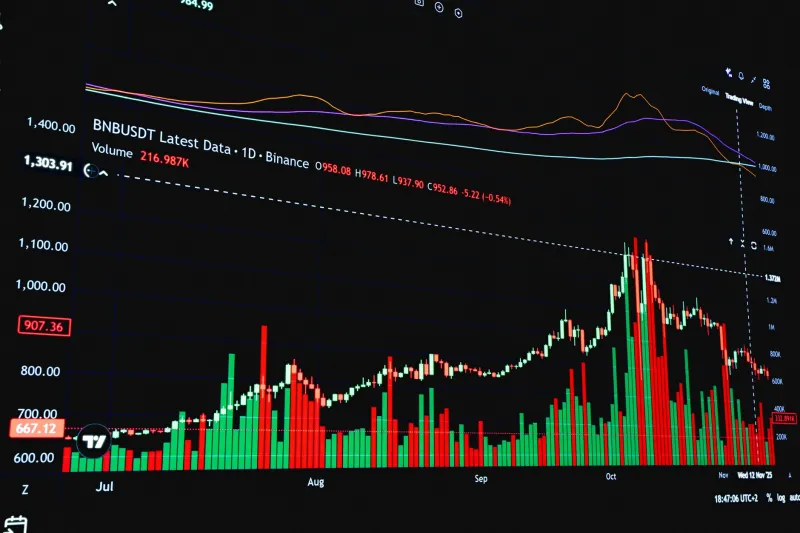
You found the project. The whitepaper looked solid, the Discord was buzzing, and the chart was doing that thing you love. You bought in. Then, over the next six months, the price just... drifted lower. No crash, no scandal — just a slow, grinding descent that left you wondering what went wrong.
Chances are, the answer was baked into the tokenomics before you ever hit the buy button.
Tokenomics — the economic architecture governing a cryptocurrency's supply — is one of the most underappreciated factors in crypto investing. While traders are busy watching RSI levels and Twitter sentiment, an invisible force called supply inflation is often working against them in the background. Understanding how it operates is the difference between riding a rocket and slowly sinking into a gravity well you can't escape.
What Tokenomics Actually Controls
At its core, tokenomics answers a few fundamental questions: How many tokens exist? How many will ever exist? Who holds them, and when do they get to sell? How does new supply enter circulation?
The answers to these questions shape price more than most people realize. Supply and demand is Econ 101, but in crypto, the supply side is programmable — which means it can be engineered either to reward holders or to quietly extract value from them.
There are three main levers to pay attention to:
1. Inflation Rate — How fast is new supply entering the market? A token that mints new coins to reward validators, liquidity providers, or stakers is constantly adding sell pressure. If the project isn't growing fast enough to absorb that new supply, price drops.
2. Hard Caps — Does the token have a maximum supply? Bitcoin's 21 million hard cap is the most famous example of enforced scarcity. Tokens without a cap, or with a cap so high it's effectively meaningless, don't carry the same fundamental floor.
3. Burn Mechanisms — Does the protocol remove tokens from circulation? Ethereum's EIP-1559 introduced a burn mechanism that destroys a portion of gas fees with every transaction. During high-activity periods, ETH actually becomes deflationary. That's a meaningful tailwind for price.
The Inflation Trap: When Rewards Become a Tax
Here's a scenario that plays out constantly in DeFi: a new protocol launches with a governance or utility token. To bootstrap liquidity, they offer sky-high staking rewards — sometimes 200%, 500%, even 1,000% APY. Users flood in, park their tokens, and collect rewards.
But where do those rewards come from? New token emissions. Every day, thousands or millions of new tokens are minted and distributed to stakers. If demand for the token isn't growing at the same pace — or faster — the price gets diluted. Early stakers often dump their rewards the moment they receive them, creating constant downward pressure.
This is the inflation trap. You're earning tokens, but each one is worth less than the one before it. The APY looks great on paper, but in dollar terms, you might be treading water or actively losing ground.
Projects like early Olympus DAO (OHM) became cautionary tales in this regard. The rebase mechanics and astronomical APY attracted billions in capital — until the selling pressure from emissions overwhelmed demand, and the token collapsed more than 99% from its highs. The math was always going to catch up. It usually does.
Hard Caps: The Scarcity Premium
Not all tokenomics are working against you. Some are deliberately engineered for scarcity, and the price action over time tends to reflect that design.
Bitcoin is the obvious example, but it's worth understanding why the hard cap matters beyond the meme. With a fixed supply and predictable halving schedule — which cuts new BTC issuance in half roughly every four years — the inflation rate trends toward zero over time. Meanwhile, demand has historically grown. The result is a structural supply squeeze that has, across multiple cycles, driven significant price appreciation.
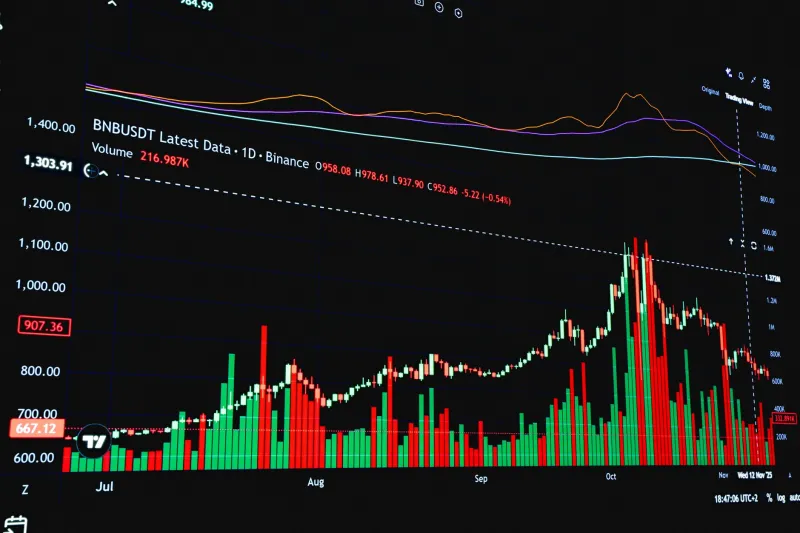
Projects that have taken notes on this model and applied it thoughtfully include Binance Coin (BNB), which uses quarterly burns tied to exchange revenue, and Ethereum post-Merge, where staking rewards are partially offset by fee burns. Neither is as purely scarce as Bitcoin, but both have mechanisms that meaningfully limit runaway supply growth.
When evaluating any altcoin, ask: what happens to supply five years from now? If the answer is "a lot more tokens exist and there's no burn mechanism," that's a red flag worth taking seriously.
Spotting Tokenomic Red Flags Before You Buy
You don't need a economics degree to evaluate tokenomics. You need to know where to look and what questions to ask.
Check the vesting schedule. Team tokens, investor allocations, and advisor shares that unlock over time represent future sell pressure. If a large percentage of supply is held by insiders and scheduled to unlock in the next 12 months, that's a meaningful headwind. Tools like Token Unlocks and Vesting.finance make this data accessible.
Find the emission schedule. Most projects publish this in their documentation or whitepaper. Look for the current circulating supply versus the max supply. If only 15% of tokens are in circulation right now, that means 85% is still coming — and some of it will hit the market eventually.
Look for utility tied to burning. Burns that happen because the protocol is actually being used are more sustainable than manual team burns done as PR moves. Protocol-driven burns scale with adoption; manual burns are just optics.
Understand who holds what. On-chain tools like Etherscan, Nansen, or Arkham Intelligence can show you token concentration. If the top 10 wallets hold 60% of supply and those wallets are unlabeled, that's worth investigating before you buy.
The Projects Getting It Right
It's not all doom and gloom. Some newer projects have learned from the graveyard of inflationary tokens and are building more thoughtful supply models.
Look for protocols that tie emissions directly to protocol revenue — meaning tokens are only minted when the ecosystem can actually support the new supply. Others are experimenting with dynamic burn rates that increase during high-demand periods, creating a natural stabilizer. Some are even building in governance mechanisms that let the community vote to adjust emissions if inflation is outpacing growth.
These aren't perfect solutions, but they reflect a maturing understanding of what sustainable tokenomics actually looks like.
The Bottom Line
Price charts don't tell the whole story. Behind every altcoin's trajectory is a supply model that's either working in your favor or quietly eroding your position. Inflation that outpaces demand, massive unlock events, and uncapped supply schedules are structural forces — and structural forces don't care about your conviction.
Before you buy into the next hyped project, take 20 minutes to understand how its supply works. Read the tokenomics section of the whitepaper. Check what percentage of supply is still locked. Ask whether the burn mechanism is real or cosmetic.
Out here in the outer reaches of crypto, the projects that survive long-term are almost always the ones that got the supply math right from the start. Everything else is just noise — and gravity.