Last Light Before Blackout: How Altcoins Fake Their Biggest Moves Right Before They Die
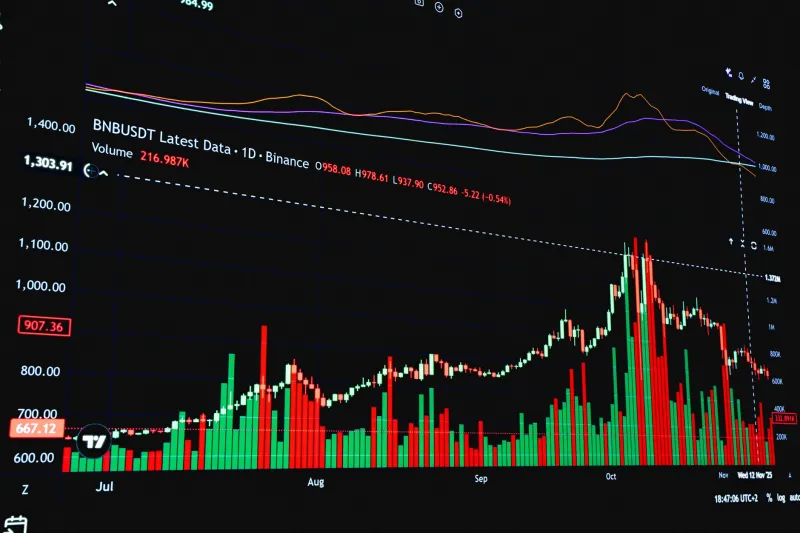
There's a cruel trick that crypto markets love to play on retail traders, and it goes something like this: you've been holding an altcoin through weeks of sideways price action, maybe even through some painful drawdowns. Then, out of nowhere, the thing explodes. Volume spikes. Twitter lights up. The chart looks like it's finally breaking out. You feel vindicated.
And then it all falls apart.
This isn't random bad luck. It's a recognizable pattern that plays out over and over in crypto markets, and understanding it could be the difference between locking in gains and watching your portfolio crater. The sharpest rallies in an altcoin's life cycle often happen in the final stretch before a catastrophic collapse — and once you know what to look for, you'll never look at a green candle the same way again.
Why the Final Rally Happens at All
To understand the blowoff top, you need to understand who's actually driving the price at that stage. By the time an altcoin has been circulating for a while, the early investors — the ones who got in at seed or private sale prices — are sitting on significant unrealized gains. Vesting schedules are unlocking. Team wallets are getting active. The project's narrative might still be intact on the surface, but underneath, the smart money is quietly looking for the exit.
The problem is that a big sell order into a thin market tanks the price and makes the exit obvious. So what happens instead? Coordinated or organic buying pressure gets amplified, social media buzz gets turned up, and new retail buyers pile in chasing momentum. The price surges. Volume looks healthy. Everything appears legitimate.
This creates the conditions for a textbook blowoff top — a sharp, near-vertical price increase fueled by FOMO buying, often happening on elevated volume, that exhausts buying pressure in a very short window. Once that wave of new money runs out, there's no one left to sell to except other retail holders, and the price collapses.
Reading the Warning Signs on the Chart
The good news is that blowoff tops leave fingerprints. You don't need to be a technical analysis wizard to spot them — you just need to know what you're looking at.
Parabolic price extension. When a coin's price starts moving in a near-vertical line — not a steady uptrend, but a near-90-degree angle — that's a red flag. Sustainable rallies climb. Blowoffs rocket. The steeper and faster the move, the more unsustainable it is.
Volume divergence on the way up. In a healthy rally, volume tends to expand with price. In a blowoff, you'll often see massive volume spikes early in the move that start to taper even as price keeps climbing. When price is still rising but volume is quietly dying, the buying pressure is running out of fuel.
RSI and momentum extremes. Relative Strength Index readings above 80 or 85 on a daily or weekly chart aren't automatically a sell signal, but when they appear alongside a parabolic price move and thinning volume, they're telling you the asset is deeply overbought. Momentum indicators like MACD can also show bearish divergence — price making new highs while the indicator makes lower highs — which is one of the clearest warning signals in technical analysis.
Wicks and rejection candles. Watch for long upper wicks on candlesticks near the top. These show that buyers pushed the price up aggressively during a session, but sellers came in hard enough to push it back down before the close. One wick is noise. Multiple rejection wicks at the same price level is the market telling you there's heavy supply waiting up there.
The Psychological Trap That Catches Everyone
Here's the part nobody likes to talk about: the blowoff top is psychologically engineered to catch you at your most optimistic. You've survived the boring sideways grind. You've maybe added to your position during the dip. And now the price is finally doing what you always believed it would do.
That emotional investment is exactly what makes the trap so effective. Confirmation bias kicks in hard — every piece of positive news gets amplified, every warning sign gets rationalized away. When someone raises a concern in a Telegram group or on Reddit, they get shouted down by the believers. The social dynamics of crypto communities actively suppress skepticism at exactly the moment when skepticism is most valuable.
This is compounded by the fact that the final rally can last longer than you'd expect. Blowoff tops don't always resolve in a single day. Sometimes they stretch over days or even a couple of weeks, giving you just enough time to convince yourself that this one's different, that the fundamentals justify the price, that the old resistance is now support.
It rarely is.
What to Actually Do About It
None of this means you should panic-sell every time your altcoin has a good week. The goal isn't to become so paranoid that you exit every position at the first sign of strength. The goal is to build a framework for distinguishing between legitimate momentum and a last-gasp rally.
A few practical approaches:
Set price targets before the rally starts. If you've already decided at what price you'll take profits, you're less likely to get caught up in the euphoria of a blowoff. Pre-commitment removes the emotional decision-making from the equation.
Scale out, don't exit all at once. When you start seeing blowoff signals — parabolic extension, volume divergence, overbought momentum — consider trimming your position in stages rather than trying to nail the exact top. You'll leave some gains on the table, but you'll also avoid riding the whole thing back down.
Watch on-chain data. Tools like wallet tracking, exchange inflow/outflow data, and large transfer alerts can give you a heads-up when major holders are moving coins to exchanges — which typically precedes significant selling. When the wallets that have been dormant for months suddenly get active right as price is spiking, that's worth paying attention to.
Ignore the community noise at the top. The louder and more euphoric the community gets, the more skeptical you should be. This isn't cynicism — it's pattern recognition. Crypto communities are at their most bullish and most wrong at exactly the same moment.
The Outer Edge of the Rally
The blowoff top is one of crypto's most reliable and most devastating patterns. It's reliable because the incentive structure that creates it — early investors needing exits, retail FOMO providing liquidity — is baked into how most altcoin projects are structured. It's devastating because it happens at the precise moment when holding feels most justified.
The traders who navigate it best aren't the ones with the best technical setups or the most sophisticated on-chain tools. They're the ones who've internalized a simple truth: in altcoin markets, the most exciting price action is often the most dangerous. When everything looks perfect and everyone's celebrating, that's exactly when you should be asking what you're missing.
Because in crypto, the brightest light usually comes right before the blackout.