The Last Mile of Sovereignty: What It Actually Takes to Verify Your Own Crypto From a Garage in Ohio
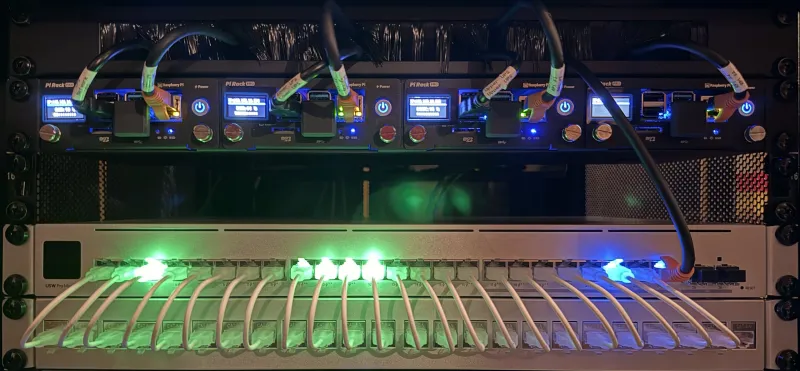
Photo: home server setup raspberry pi desk, via homelab.anita-fred.net
Everyone Stops at the Hardware Wallet
Ask any crypto Twitter personality about self-custody and you'll get the same sermon: move your coins off the exchange, grab a Ledger or a Trezor, and you're free. And to be fair, that's a real upgrade. But it's also where the journey stops for roughly 99% of American crypto holders.
Here's the uncomfortable part. If you're reading your balance from a wallet app that pulls data from Infura or a public RPC endpoint, you're not actually verifying anything. You're trusting someone else's computer to tell you the truth. The whole point of Bitcoin and Ethereum was supposed to be that you don't have to trust anybody. Self-custody without self-verification is sovereignty with a landlord.
Running your own node is the finish line nobody crosses. Let's talk about why — and what it would actually take for you to get there.
The Hardware Bill Is Smaller Than You Think
The good news first: you don't need a server rack in your basement. A Raspberry Pi 5 with a 2TB NVMe drive can run a Bitcoin node comfortably, and the whole setup runs somewhere between $250 and $400 depending on how fancy you get. Ethereum is hungrier — its archive requirements are brutal, but a full node with the default settings runs fine on a used mini PC with 16GB of RAM and a 2TB SSD, usually $500 to $700 all-in.
Compare that to what most of us have spent on a single altcoin position that went to zero, and the barrier starts to look less like a wall and more like a turnstile.
The real cost isn't the hardware. It's the patience. Syncing an Ethereum node from genesis can take days and chew through bandwidth. Bitcoin's initial block download is faster but still a multi-day affair on a typical residential connection. You will spend a weekend troubleshooting, and there's no customer support line to call.
Your ISP Is the Silent Gatekeeper
Here's something the node evangelists rarely mention: running a node means opening ports and uploading gigabytes of data continuously. On Comcast, Spectrum, or AT&T's residential plans, that puts you in murky territory.
- Data caps: Xfinity's 1.2TB cap can get tight if you're also re-syncing or serving peers aggressively. Most months you'll be fine, but a re-sync can blow through it.
- Port blocking: Some residential ISPs filter inbound traffic on common ports, which limits how many peers can connect to you. Your node still works for your own verification, but it contributes less to the network.
- The "commercial use" gray zone: Running a node isn't technically against any residential terms of service, but if your ISP notices sustained server-like traffic, you might get a friendly (or not so friendly) notice. Nobody's getting raided over a Bitcoin node, but a throttled connection is a real annoyance.
There's also the legal gray area of mining-adjacent activity in places like New York, where the BitLicense regime and the 2022 mining moratorium created a chilling effect on anything that looks like crypto infrastructure. A node is not a miner — it doesn't consume meaningful power or secure the network through proof of work — but explaining that distinction to a landlord or an HOA is its own adventure.
What You Actually Get for the Trouble
So why bother? Three reasons that matter more every year.
1. You can't be lied to. A malicious or compromised RPC provider can show you a fake balance, feed you a fraudulent transaction, or quietly censor which transactions you see. When you query your own node, that attack surface disappears.
2. Your wallet gets private. Every time your wallet asks a public node about your addresses, you're leaking your financial activity to that provider. Your own node keeps that between you and your router.
3. You become the network. Bitcoin has roughly 20,000 reachable nodes, and a meaningful chunk of those are hosted on data center servers owned by a handful of companies. Decentralization isn't an abstraction — it's a headcount, and it needs hobbyists in garages in Ohio and garages in Fresno.
The Honest Downsides
A node doesn't protect you from losing your keys. It doesn't make your coins worth more. It won't speed up your transactions or lower your fees. If you expect it to, you'll be disappointed.
What it does is close the loop. The keys in your hardware wallet prove ownership; the node proves the whole system is behaving. One without the other is half a philosophy.
A Realistic Starting Path
If this article has you half-convinced, here's the low-friction version:
- Start with Bitcoin. It's the easier sync and the lighter lift.
- Buy a purpose-built option like a Start9 or Umbrel device, or roll your own Raspberry Pi if you enjoy tinkering.
- Run it on Tor to dodge the port-forwarding headache entirely.
- Point a wallet like Sparrow or Electrum at your node and verify a transaction yourself. That first moment — when your balance comes from your own machine, not someone's API — is worth the whole weekend.
The crypto industry loves to talk about decentralization in the abstract. The last mile of self-custody is where it becomes concrete. Almost nobody finishes the journey. That's exactly why it matters that you do.